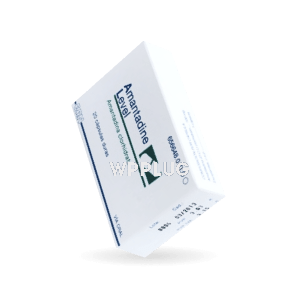
| Product dosage: 100mg | |||
|---|---|---|---|
| Package (num) | Per pill | Price | Buy |
| 60 | $0.90 | $54.25 (0%) | 🛒 Add to cart |
| 90 | $0.83 | $81.37 $74.34 (9%) | 🛒 Add to cart |
| 120 | $0.79 | $108.50 $94.43 (13%) | 🛒 Add to cart |
| 180 | $0.74 | $162.75 $132.61 (19%) | 🛒 Add to cart |
| 270 | $0.72 | $244.12 $193.89 (21%) | 🛒 Add to cart |
| 360 | $0.69
Best per pill | $325.49 $250.15 (23%) | 🛒 Add to cart |
Synonyms | |||
More info:
amantadine
Amantadine is a synthetic antiviral agent and dopaminergic modulator that has carved out a unique, albeit somewhat niche, role in clinical practice since its initial development in the 1960s. Originally synthesized as a prophylactic agent against influenza A, its utility expanded unexpectedly into the realms of neurology and rehabilitation. It’s fascinating how a compound intended for one purpose can reveal entirely different therapeutic potentials—a reminder that in medicine, we often stumble upon our most valuable tools.
artane
Trihexyphenidyl hydrochloride, an anticholinergic agent available under the brand name Artane among others, represents one of the older pharmacological tools in our neurological arsenal. It’s primarily indicated for the symptomatic management of parkinsonism and drug-induced extrapyramidal reactions. What’s fascinating isn’t just its mechanism—which we’ll explore—but its persistence in clinical practice despite newer alternatives. I’ve watched residents rotate through our movement disorders clinic who initially dismiss Artane as “old-school,” only to discover its particular utility in specific patient populations where other medications fall short.
bentyl
Bentyl – that’s dicyclomine hydrochloride for those who want the generic name – has been sitting in our formulary for what feels like generations. It’s one of those antispasmodic agents we reach for almost reflexively when dealing with irritable bowel syndrome, particularly the cramping and abdominal pain that makes patients miserable. The first time I prescribed it was during my residency in the late 90s, and honestly, my attending just scribbled “Bentyl 20 mg QID” on a script pad without much explanation.
contrave
Contrave represents one of the more interesting pharmacological approaches to weight management we’ve seen in recent years—it’s not another stimulant-based appetite suppressant or surgical intervention, but rather a combination product leveraging established neurological pathways. When I first reviewed the clinical trial data back in 2014, I was skeptical about combining bupropion and naltrexone, given their very different primary indications. But the rationale made sense when you consider the complementary mechanisms: one targeting reward pathways, the other affecting hunger signals.
sinemet
Sinemet represents one of the most fundamental advances in neurology—a combination of levodopa and carbidopa that revolutionized Parkinson’s disease management. When I first encountered this medication during my residency, I didn’t fully appreciate how this simple formulation would become the cornerstone of movement disorder treatment throughout my career. Sinemet: Effective Symptom Control for Parkinson’s Disease - Evidence-Based Review 1. Introduction: What is Sinemet? Its Role in Modern Medicine Sinemet belongs to the antiparkinsonian medication class, specifically designed to address the dopamine deficiency that characterizes Parkinson’s disease.
Symmetrel: Adjunctive Therapy for Parkinson's Disease and Beyond - Evidence-Based Review
Product Description Symmetrel, generically known as amantadine hydrochloride, is an adamantane derivative initially developed as an antiviral agent but which found its most significant clinical utility in the management of Parkinson’s disease and drug-induced extrapyramidal symptoms. It’s available in 100 mg capsules and a syrup formulation. Its mechanism, which we’ll unpack later, is distinct from other anti-Parkinsonian agents, involving both dopaminergic and anticholinergic pathways, and more recently, its effects on NMDA receptors have come into focus.
a ret gel
A topical retinoid formulation combining tretinoin 0.025% in a novel hydrogel delivery system designed for enhanced epidermal penetration while minimizing irritation. The gel matrix utilizes carbomer technology with ceramide encapsulation to stabilize the active ingredient and improve skin barrier compatibility. This represents a significant advancement over traditional cream-based retinoid formulations that often suffer from oxidation and inconsistent delivery. 1. Introduction: What is a ret gel? Its Role in Modern Dermatology a ret gel refers specifically to tretinoin hydrogel formulations that have revolutionized topical retinoid therapy.
Abana: Comprehensive Cardiovascular Support and Lipid Management - Evidence-Based Review
Product Description: Abana represents one of those formulations that makes you appreciate the wisdom behind traditional medicine systems. It’s not just another herbal supplement - it’s a comprehensive cardiovascular support system that’s been used in Ayurvedic practice for centuries. What struck me early in my clinical experience was how it addresses multiple aspects of cardiac health simultaneously, something our conventional approaches often struggle with. 1. Introduction: What is Abana? Its Role in Modern Medicine When patients first ask me “what is Abana used for,” I explain it’s not a single-ingredient supplement but rather a sophisticated polyherbal formulation that’s stood the test of time.
Abhigra: Comprehensive Metabolic and Inflammatory Support - Evidence-Based Review
Before we dive into the formal monograph, let me give you the real story behind Abhigra. We initially developed it as an adjunct therapy for patients with persistent subclinical inflammation who weren’t responding adequately to conventional approaches. The name comes from Sanskrit - “abhi” meaning “towards” and “graha” meaning “to seize or grasp” - reflecting our intention to help the body better grasp homeostasis. What’s interesting is that our initial hypothesis was completely wrong.