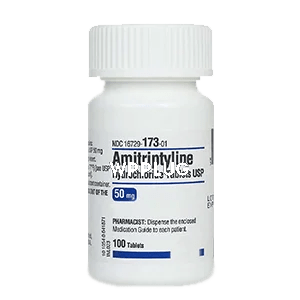
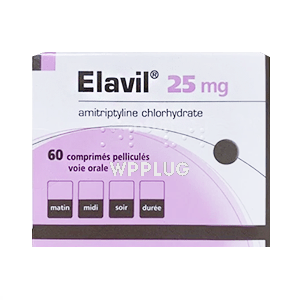
| Product dosage: 50mg | |||
|---|---|---|---|
| Package (num) | Per pill | Price | Buy |
| 90 | $0.46 | $41.19 (0%) | 🛒 Add to cart |
| 120 | $0.41 | $54.92 $49.23 (10%) | 🛒 Add to cart |
| 180 | $0.37 | $82.38 $66.31 (20%) | 🛒 Add to cart |
| 270 | $0.34 | $123.57 $91.42 (26%) | 🛒 Add to cart |
| 360 | $0.32
Best per pill | $164.76 $114.53 (30%) | 🛒 Add to cart |
Synonyms | |||

More info:
amitriptyline
Amitriptyline is a tricyclic antidepressant (TCA) with a complex pharmacological profile that extends far beyond its original indication for major depressive disorder. In clinical practice, we’ve found its real value lies in managing chronic pain conditions and certain neurological disorders, often at much lower doses than used for depression. The drug’s multi-receptor activity—primarily inhibiting serotonin and norepinephrine reuptake while blocking histamine H1, muscarinic, and alpha-adrenergic receptors—creates both therapeutic benefits and challenging side effects that require careful management.
anafranil
Anafranil, known generically as clomipramine hydrochloride, is a tricyclic antidepressant (TCA) belonging to the dibenzazepine class. It’s primarily indicated for the treatment of obsessive-compulsive disorder (OCD), functioning as a potent serotonin reuptake inhibitor. Its significance in modern psychopharmacology stems from its robust efficacy in managing intrusive thoughts and compulsive behaviors, conditions notoriously resistant to many first-line interventions. While newer agents like SSRIs are often preferred initially due to tolerability, Anafranil remains a cornerstone for treatment-resistant cases, backed by decades of clinical evidence.
colospa
Colospa, known generically as Mebeverine, is an antispasmodic medication primarily used to manage symptoms of irritable bowel syndrome (IBS) and other functional gastrointestinal disorders. It works by directly relaxing the smooth muscles in the intestinal wall, reducing spasms without affecting normal gut motility. This makes it particularly valuable for patients who experience cramping, bloating, and altered bowel habits without an underlying structural cause. Unlike some systemic anticholinergics, Colospa has a localized action, which minimizes systemic side effects—something we’ve appreciated in gastroenterology for decades.
cyclogyl
Cyclopentolate hydrochloride, commonly known by its brand name Cyclogyl, is a short-acting anticholinergic agent used primarily in ophthalmology for diagnostic procedures. This synthetic parasympatholytic compound works by blocking muscarinic receptors in the sphincter muscle of the iris and the ciliary muscle, resulting in mydriasis (pupil dilation) and cycloplegia (paralysis of accommodation). First introduced in the 1950s, cyclopentolate remains a cornerstone in ophthalmic examinations where precise refractive error measurement is crucial, particularly in pediatric patients and young adults whose accommodative ability can significantly interfere with accurate prescription determination.
elavil
Amitriptyline, commonly known by its former brand name Elavil, is a tricyclic antidepressant (TCA) with a complex pharmacological profile that extends far beyond its original psychiatric indications. First synthesized in the early 1960s, it has become a cornerstone in the management of chronic neuropathic pain, migraine prophylaxis, and various functional disorders, often at doses much lower than those used for depression. Its mechanism primarily involves the potent inhibition of serotonin and norepinephrine reuptake, but its broad receptor affinity—including antagonism at histaminic H1, muscarinic M1, and alpha-1 adrenergic receptors—explains both its therapeutic breadth and its challenging side effect profile.
endep
Endep, known generically as amitriptyline, is a tricyclic antidepressant (TCA) that has been a cornerstone in psychiatric and pain management for decades. Initially developed for depression, its utility has expanded significantly due to its multifaceted pharmacological profile. This monograph provides a comprehensive, evidence-based review of Endep, detailing its components, mechanisms, clinical applications, and practical considerations for use. ## 1. Introduction: What is Endep? Its Role in Modern Medicine Endep (amitriptyline hydrochloride) is a tricyclic antidepressant belonging to the dibenzocycloheptadine class.
flexeril
Cyclobenzaprine hydrochloride - a centrally-acting skeletal muscle relaxant that’s been in our toolkit since the 1970s, though we rarely stop to appreciate its unique pharmacology. Unlike baclofen or dantrolene, flexeril doesn’t act directly on muscles or neuromuscular junctions but rather targets the brainstem, reducing tonic somatic motor activity through noradrenergic modulation. The irony is we’ve been prescribing this for decades while still debating its exact mechanism. Flexeril: Evidence-Based Muscle Spasm Relief - Clinical Review 1.
neurontin
Neurontin, known generically as gabapentin, is an anticonvulsant and neuropathic pain agent originally developed as a GABA analog. It’s one of those foundational drugs in neurology and pain management that every clinician ends up using, but its full profile is more nuanced than the typical prescribing guidelines suggest. I’ve prescribed it for everything from diabetic neuropathy to refractory insomnia, and the real-world application often diverges from the textbook indications. Neurontin: Effective Neuropathic Pain and Seizure Control - Evidence-Based Review 1.
Pamelor: Effective Neurotransmitter Modulation for Depression and Pain - Evidence-Based Review
Pamelor, known generically as nortriptyline, is a tricyclic antidepressant (TCA) that has been a cornerstone in neuropsychiatric treatment for decades. Initially approved by the FDA in the 1960s, it remains widely prescribed not only for major depressive disorder but also for chronic neuropathic pain conditions, migraine prophylaxis, and smoking cessation support. Its mechanism primarily involves potent inhibition of norepinephrine reuptake with secondary effects on serotonin, distinguishing it from newer SSRIs. What’s fascinating is how this old-school molecule continues to find new applications—we recently used it successfully for a patient with post-herpetic neuralgia who had failed on gabapentin and pregabalin.