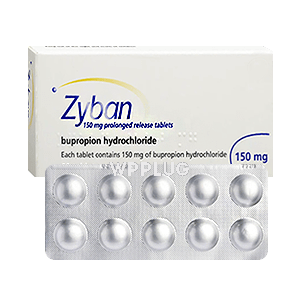
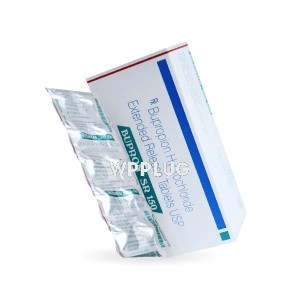
| Product dosage: 150mg | |||
|---|---|---|---|
| Package (num) | Per pill | Price | Buy |
| 10 | $4.02 | $40.20 (0%) | 🛒 Add to cart |
| 20 | $3.02 | $80.41 $60.31 (25%) | 🛒 Add to cart |
| 30 | $2.35 | $120.61 $70.36 (42%) | 🛒 Add to cart |
| 60 | $1.34 | $241.23 $80.41 (67%) | 🛒 Add to cart |
| 90 | $1.01 | $361.84 $90.46 (75%) | 🛒 Add to cart |
| 120 | $0.84 | $482.45 $100.51 (79%) | 🛒 Add to cart |
| 180 | $0.75 | $723.68 $135.69 (81%) | 🛒 Add to cart |
| 270 | $0.67 | $1085.51 $180.92 (83%) | 🛒 Add to cart |
| 360 | $0.59
Best per pill | $1447.35 $211.07 (85%) | 🛒 Add to cart |
Similar products
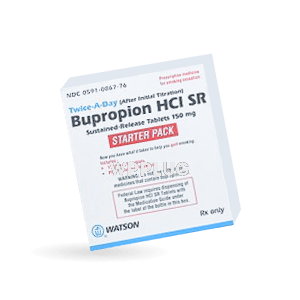
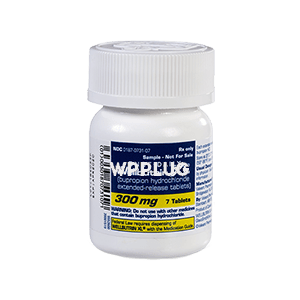
More info:
zyban
Zyban, known generically as bupropion hydrochloride, is a prescription medication primarily indicated as an aid to smoking cessation treatment. It’s not a dietary supplement but rather a pharmaceutical agent that requires medical supervision. Originally developed and still used as an antidepressant (Wellbutrin), its application in smoking cessation emerged from clinical observations that patients taking it for depression reported reduced tobacco cravings and easier quitting success. I remember when we first started using Zyban off-label for smoking cessation back in the late 90s - we were frankly skeptical.
bupron sr
Bupropion SR, or sustained-release bupropion, represents one of those rare psychopharmacological innovations that actually changed how we approach depression treatment in clinical practice. Unlike the flood of me-too SSRIs that dominated the 90s, bupropion brought something genuinely different to the table - a novel mechanism that didn’t involve serotonin. I still remember the skepticism when we first started prescribing it. “An antidepressant that doesn’t work on serotonin? How could that possibly help?
bupropion
Bupropion is an atypical antidepressant belonging to the aminoketone class, structurally distinct from SSRIs and TCAs. It functions primarily as a norepinephrine-dopamine reuptake inhibitor (NDRI) with minimal serotonergic activity, which explains its unique side effect profile and therapeutic applications beyond depression. We initially thought it was just another antidepressant option, but the dopamine component turned out to be far more clinically significant than anyone anticipated. 1. Introduction: What is Bupropion? Its Role in Modern Medicine What is bupropion used for?
wellbutrin
Bupropion hydrochloride, marketed under the brand name Wellbutrin, represents a unique class of antidepressant medication that diverges significantly from traditional selective serotonin reuptake inhibitors (SSRIs). As an aminoketone and norepinephrine-dopamine reuptake inhibitor (NDRI), its mechanism targets different neurotransmitter systems, offering an alternative pathway for managing major depressive disorder and other conditions where serotonin-focused approaches prove insufficient or problematic. The development timeline from initial synthesis to widespread clinical adoption reveals fascinating pharmacologic evolution.
wellbutrin sr
Bupropion hydrochloride sustained-release, commonly known by its brand name Wellbutrin SR, represents a unique antidepressant option in modern psychopharmacology. Unlike many first-line antidepressants that primarily target serotonin systems, this medication operates through a distinct noradrenergic-dopaminergic mechanism that creates both its therapeutic benefits and characteristic side effect profile. The sustained-release formulation was specifically engineered to mitigate the peak-trough plasma concentration issues that plagued the original immediate-release version, allowing for twice-daily dosing while maintaining more consistent therapeutic levels.
a ret gel
A topical retinoid formulation combining tretinoin 0.025% in a novel hydrogel delivery system designed for enhanced epidermal penetration while minimizing irritation. The gel matrix utilizes carbomer technology with ceramide encapsulation to stabilize the active ingredient and improve skin barrier compatibility. This represents a significant advancement over traditional cream-based retinoid formulations that often suffer from oxidation and inconsistent delivery. 1. Introduction: What is a ret gel? Its Role in Modern Dermatology a ret gel refers specifically to tretinoin hydrogel formulations that have revolutionized topical retinoid therapy.
Abana: Comprehensive Cardiovascular Support and Lipid Management - Evidence-Based Review
Product Description: Abana represents one of those formulations that makes you appreciate the wisdom behind traditional medicine systems. It’s not just another herbal supplement - it’s a comprehensive cardiovascular support system that’s been used in Ayurvedic practice for centuries. What struck me early in my clinical experience was how it addresses multiple aspects of cardiac health simultaneously, something our conventional approaches often struggle with. 1. Introduction: What is Abana? Its Role in Modern Medicine When patients first ask me “what is Abana used for,” I explain it’s not a single-ingredient supplement but rather a sophisticated polyherbal formulation that’s stood the test of time.
Abhigra: Comprehensive Metabolic and Inflammatory Support - Evidence-Based Review
Before we dive into the formal monograph, let me give you the real story behind Abhigra. We initially developed it as an adjunct therapy for patients with persistent subclinical inflammation who weren’t responding adequately to conventional approaches. The name comes from Sanskrit - “abhi” meaning “towards” and “graha” meaning “to seize or grasp” - reflecting our intention to help the body better grasp homeostasis. What’s interesting is that our initial hypothesis was completely wrong.
abilify
Aripiprazole, marketed under the brand name Abilify, represents a significant advancement in the atypical antipsychotic class with its unique pharmacodynamic profile. Unlike earlier antipsychotics that primarily functioned as dopamine antagonists, aripiprazole’s mechanism as a partial dopamine agonist created what we initially called “dopamine system stabilization” - a concept that seemed almost paradoxical when first introduced. The development team at Otsuka Pharmaceutical faced considerable skepticism about whether a compound could simultaneously act as both agonist and antagonist depending on the dopaminergic environment.